Why Testing Your Biological Age is Valuable
Why Testing Your Biological Age is Valuable
"The Biological Age Test That Predicts Your Next 20 Years (And How to Change Your Results)"
What if I told you there's a test that can predict whether you'll be thriving or declining at 80, based on how you're aging right now? And what if that test could guide specific interventions to literally slow down, stop, or reverse your aging process?
This isn't science fiction. It's the DunedinPace epigenetic aging test, and it's revolutionizing how we understand and approach aging.
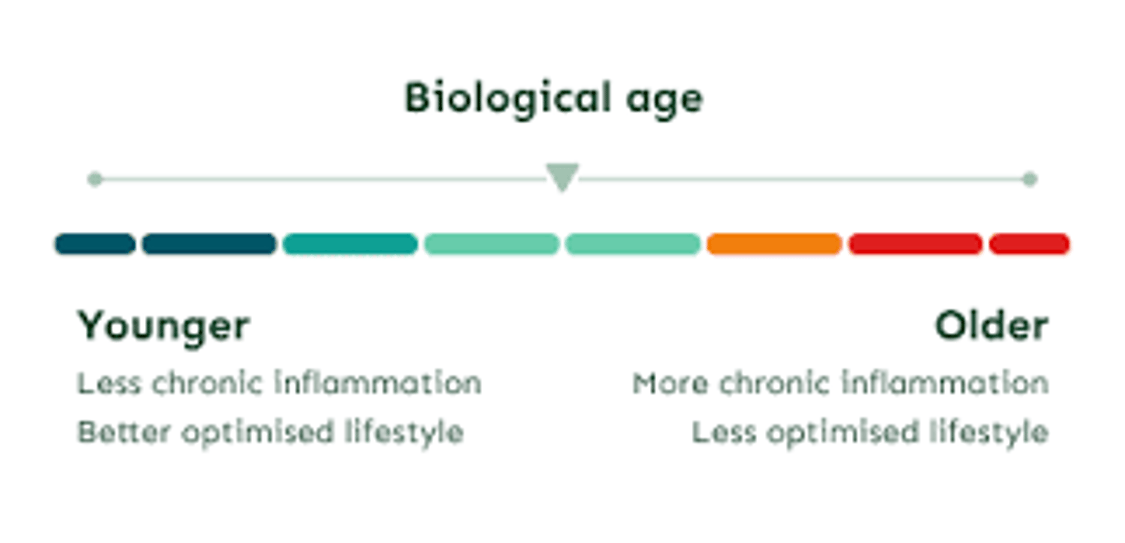
Beyond Chronological Age
Your driver's license says you're 60, but your cells might be aging at the rate of a 45-year-old—or a 75-year-old. Chronological age is just time passing. Biological age is how fast your body is actually aging.
The DunedinPace test measures your current "pace of aging"—whether you're aging slower, normal, or faster than expected for your chronological age.
The Science Behind the Test
This test analyzes DNA methylation patterns across specific sites in your genome. Methylation is like your genetic "on/off switches"—determining which genes are active and which are silent.
As we age, our methylation patterns change in predictable ways. But the RATE of these changes varies dramatically between individuals. The DunedinPace algorithm, developed from the famous Dunedin Study (following 1,000 people from birth), can now predict:
Your current biological age
How fast you're aging compared to your chronological age
Your risk trajectory for age-related diseases
How your aging rate might respond to interventions
What Your Results Mean
Pace of Aging = 1.0You're aging at the expected rate for your chronological age. A 60-year-old with this score is biologically aging like a typical 60-year-old.
Pace of Aging = 0.8You're aging 20% slower than expected. This 60-year-old is biologically aging like a 48-year-old and has the health trajectory of someone much younger.
Pace of Aging = 1.2You're aging 20% faster than expected. This 60-year-old is biologically aging like a 72-year-old and is at higher risk for age-related decline.
The Intervention Opportunity
Here's the revolutionary part: your pace of aging isn't fixed. It responds to targeted interventions, and the test can track your improvements over time.
Case Study: Robert, 64
Initial DunedinPace Results:
Chronological age: 64
Biological age: 71
Pace of aging: 1.15 (aging 15% faster than expected)
His Story:Robert felt exhausted, had declining memory, and his doctor said everything was "normal for his age." His advanced testing revealed:
Severe micronutrient deficiencies
Chronic systemic inflammation
Poor sleep quality
Suboptimal diet despite thinking he ate "healthy"
Personalized Intervention Protocol:Based on his comprehensive testing (NutrEval, GI-MAP, genetic analysis):
Targeted micronutrient repletion
Anti-inflammatory nutrition protocol
Gut health restoration
Sleep optimization strategies
Personalized exercise program
8-Month Follow-up Results:
Chronological age: 64.7
Biological age: 58
Pace of aging: 0.85 (aging 15% slower than expected)
Robert didn't just slow his aging—he reversed it. His energy doubled, his cognition sharpened, and his health trajectory completely changed.
The Pillars of Pace Modification
Nutrition Optimization
Anti-inflammatory foods reduce cellular stress
Adequate protein maintains muscle mass and metabolic health
Micronutrient sufficiency supports cellular repair
Intermittent fasting can improve metabolic flexibility
Sleep Quality
Deep sleep activates growth hormone
REM sleep supports brain detoxification
Consistent sleep schedules regulate circadian rhythms
Sleep optimization can improve pace of aging by 10-15%
Stress Management
Chronic stress accelerates telomere shortening
Meditation and mindfulness reduce inflammatory markers
Stress reduction improves sleep and immune function
Heart rate variability training optimizes autonomic function
Exercise Prescription
Resistance training maintains muscle mass and bone density
High-intensity intervals improve mitochondrial function
Regular movement reduces systemic inflammation
Exercise is one of the most powerful pace-of-aging modifiers
Environmental Optimization
Toxin reduction decreases cellular stress
Light exposure regulates circadian rhythms
Air quality affects respiratory and cardiovascular health
Temperature therapy (sauna, cold exposure) activates longevity pathways
The Predictive Power
The DunedinPace test doesn't just tell you how you're aging now—it predicts your future:
Cardiovascular disease risk
Cognitive decline probability
Physical function trajectory
Overall mortality risk
More importantly, it shows how interventions are working. Unlike other biomarkers that take months or years to change, pace of aging can show improvement in as little as 3-6 months.
Case Study: Sarah, 68
Initial Results:
Chronological age: 68
Biological age: 74
Pace of aging: 1.25 (aging 25% faster)
Sarah was headed for rapid decline. Her comprehensive testing revealed multiple modifiable factors. After 10 months of targeted interventions:
Follow-up Results:
Chronological age: 69
Biological age: 58
Pace of aging: 0.75 (aging 25% slower)
Sarah didn't just slow her aging—she reversed her biological age by 16 years while aging one chronological year.
Your Aging Trajectory is Changeable
The most important message: your current pace of aging is not your destiny. Whether you're aging faster or slower than expected, targeted interventions can optimize your trajectory.
The DunedinPace test provides:
Objective measurement of your current aging rate
Motivation for lifestyle changes
Tracking of intervention effectiveness
Prediction of future health trajectory
Taking Action
If you're serious about longevity, knowing your pace of aging is essential. It's the difference between hoping your lifestyle is helping and knowing exactly how your body is responding.
The test costs a fraction of what most people spend on supplements that may or may not be working. Yet it provides invaluable information about your aging trajectory and guides precise interventions.
Your chronological age is beyond your control. Your biological age and pace of aging are entirely within your influence.
The question isn't whether you're aging—it's how fast you're aging and whether you're willing to change that trajectory.
